Roots and Branches: We All Count
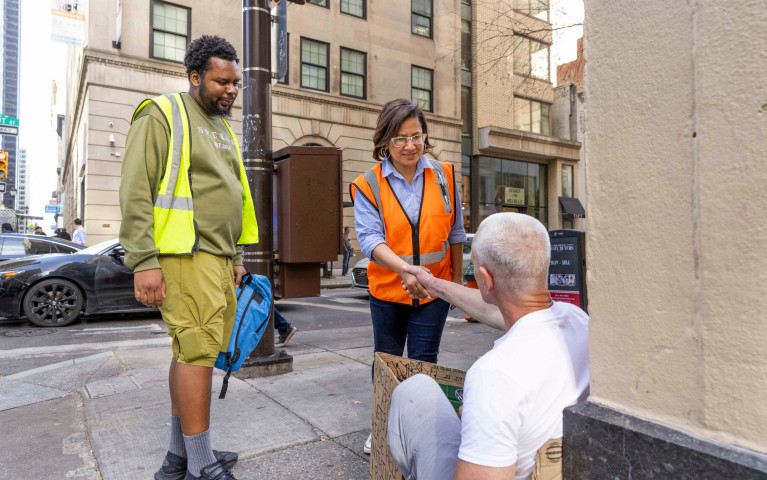
On a quiet February night, I joined more than 200 outreach workers and volunteers as they gathered across Philadelphia for the annual Point‑in‑Time Count. Armed with clipboards, handwarmers, and light blue shirts bearing three simple words, we rallied in unison: We all count. We all count. We all count. It was more than a slogan. It was a moral statement.
The federally-mandated PIT count is one night in the dead of winter when our city, and cities across the country pause long enough to truly see people who are too often ignored or invisible altogether—people sleeping outside, cycling through shelters, or surviving wherever they can. The count matters because visibility matters. Data matters. And dignity matters. When we say We All Count, we affirm that every person experiencing homelessness is worthy of being seen, valued, and invested in—not just counted and moved on from.
That belief is at the heart of Project HOME’s work, so much so that we conduct three additional counts on our own each year. And it is why recent commitments by both local and state leaders are so important.
Mayor Cherelle Parker’s proposed 2026–2027 budget includes a plan to bring 1,000 additional shelter beds online as part of the City’s effort to end chronic street homelessness. This commitment responds directly to what recent PIT Counts have made unmistakably clear: the number of our neighbors living unsheltered has increased, and the existing system does not have enough capacity to meet the need. The data showed us the gap. The Mayor’s plan is an effort to close it.
The goal is urgent and straightforward—ensure that no one seeking a safe place indoors is turned away simply because there is nowhere to go. This winter, the City pushed to increase capacity, and the Mayor has been clear that this is not just a seasonal response, but part of a broader strategy to connect people to services, treatment, and pathways to stability.
This matters because the reality on our streets is sobering. When people are living outside, outreach alone is not enough. Compassion without capacity leaves people stuck. You cannot offer dignity without a door to walk through. Increasing shelter capacity is not the end of the solution—but it is a necessary beginning.
At the same time, homelessness does not start or end at the shelter door. It begins upstream, in a housing system increasingly out of reach for far too many Pennsylvanians.
That is why Mayor Parker’s H.O.M.E. initiative and Governor Josh Shapiro’s Housing Action Plan for the Commonwealth are equally critical. These efforts recognize what advocates have long known: without increasing and preserving the housing supply—especially affordable housing—and strengthening pathways to stability, homelessness will continue to grow. For Philadelphia, alignment between city and state matters deeply. Local shelter capacity can stabilize lives in crisis, as we help them become housing-ready for options like permanent supportive housing. Statewide housing policy can prevent those crises in the first place.
At Project HOME, we live every day at the intersection of policy and people. We All Count is not just about who is included in a survey. It has always been about who is included in solutions—and a promise that visibility will lead to action, and action will lead to HOME.