More Than a Key: Why Permanent Supportive Housing Holds the Whole Story
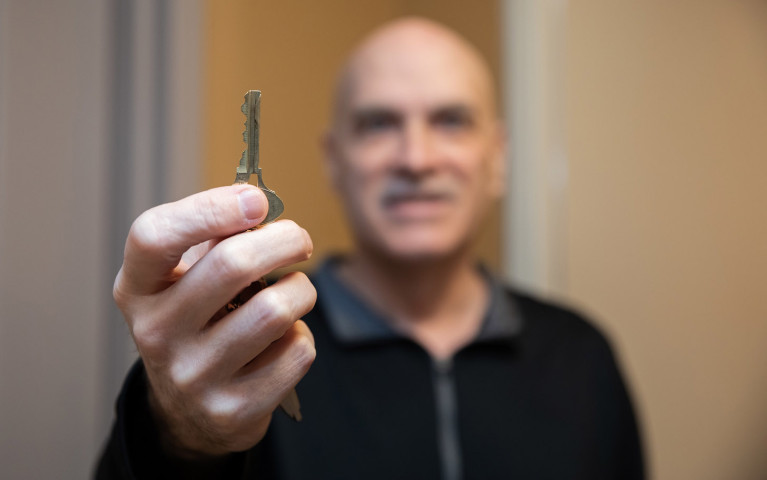
At first glance, “housing” sounds like a finish line. A set of keys. A mailbox with your name on it. A door that locks. But if the last few years have taught Philadelphia anything, it’s that a door alone can’t hold back everything that led someone into homelessness in the first place, and it can’t magically rebuild what life chipped away at while they were surviving outside.
That’s why Project HOME built its work around something bigger than housing as a standalone concept. It’s in our very name, “HOME” isn’t just a word, it’s a model: Housing, Opportunities for Employment, Medical care, and Education. And it’s why the theme that keeps showing up—across residents’ stories and staff experiences; They aren’t simply “permanent supportive housing.” It’s the insistence that you can’t have one without the other: the permanent and the supportive.
Because when the world gets sharp, “temporary” isn’t a plan. It’s a pause button.
Brandi
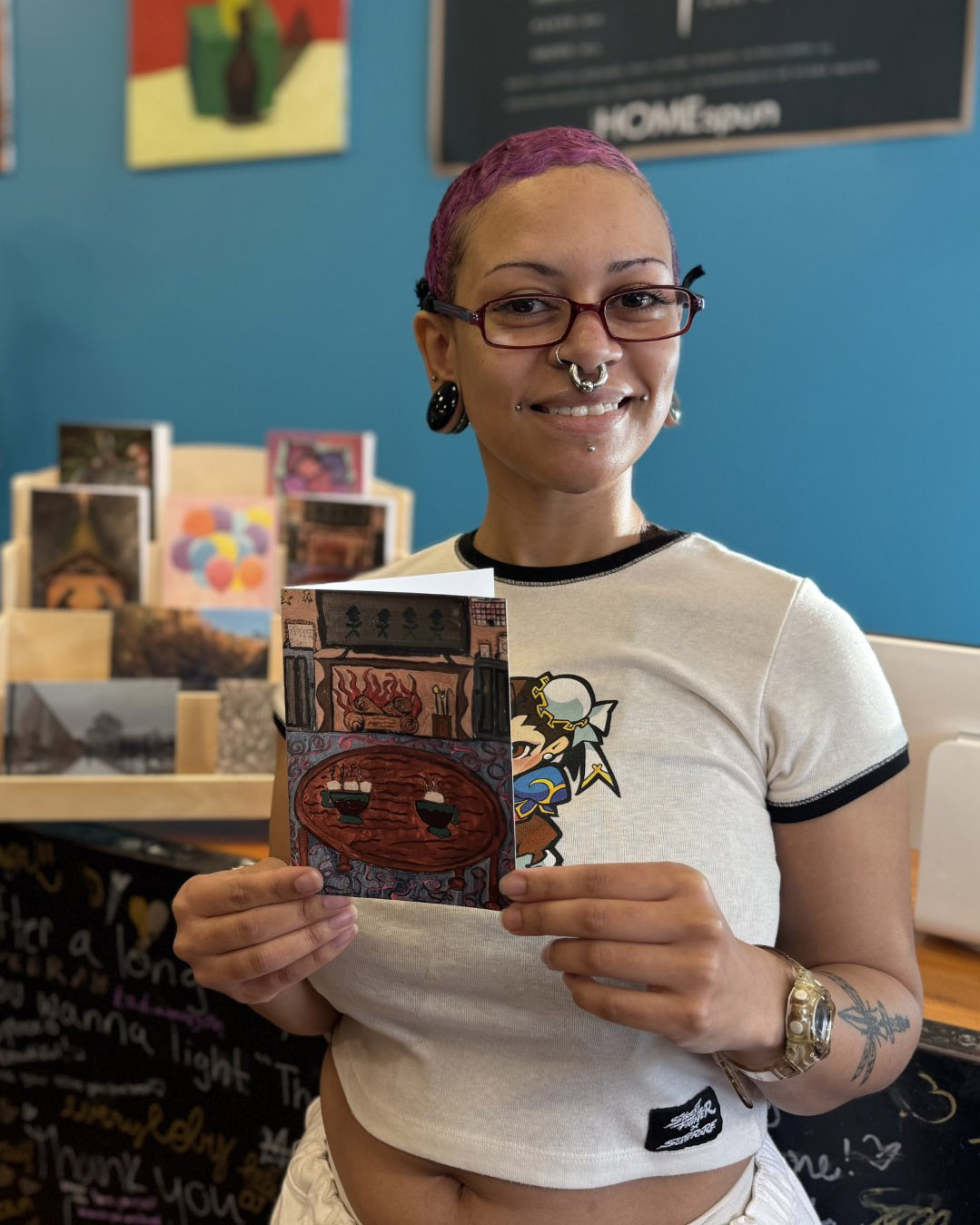 For Brandi, 31, the idea of “home” is both simple and painfully specific. It looks like family together. It looks like warmth that doesn’t depend on luck. When she imagined her ideal holiday scene for Project HOME’s annual card collection, she didn’t reach for anything extravagant. She pictured the kind of ordinary that becomes sacred when you’ve gone without it: “Everybody’s just relaxing, opening gifts and enjoying hot cocoa by the fireplace.”
Then her artwork won a residential contest for holiday card artwork through our social enterprises department.
Her reaction? She was “super excited,” and genuinely shocked with the kind of happiness that catches in your throat before it becomes a sentence.
Her card would be mass produced, mailed out, and held in thousands of hands. A piece of her inner life and her “this is what I want my world to feel like” turned into a message the whole community could hold onto.
But Brandi’s story doesn’t flatten into inspiration-poster material, and she doesn’t pretend it does. She’s from the Philadelphia area. And in the dead of winter, she was homeless on the streets, outside, exposed, doing what people do when options run out; Trying her best to survive another night.
Winter doesn’t care if you’re trying. Winter doesn’t care if you’re young. Winter can be brutal and unforgiving.
So, when Brandi talks about what made the difference, she doesn’t treat housing like a lucky lottery ticket. She describes a system with specific supports that are connected to a permanent place. Things that may sound small until you’ve lived without them: help getting identification, help with insurance, help staying steady enough to actually plan beyond the next 24 hours.
That’s the part people miss when they say, ‘Why can’t someone just get back on their feet?’ How can you can’t stand up if the ground keeps moving?
Project HOME’s model is built for that reality. We’ve developed 1,038 permanent, supportive, and affordable homes with additional units in the pipeline. Supportive services are delivered across 24 locations in Philadelphia, with supportive housing programs at 20 residences. This isn’t a single intervention. It’s infrastructure, human, brick-and-mortar, and deeply practical.
And Brandi is clear about what happens when the support is real: it stops being a rescue and starts being a runway. “Project HOME creates a path for you,” she says because the point isn’t just to survive homelessness, it’s to outgrow it.
Even so, she doesn’t hand all the credit away. She names her own choices and her own grind that make up her story. She talks about strength and determination like they’re the tools she had to use day in and day out. Because yes, services matter. Housing matters. But nobody can “donate” a person’s will to keep going. Brandi built that part herself.
What permanent supportive housing did and what it keeps doing is making that will worth something. It gave her stability long enough to turn her efforts into progress.
When Brandi describes our famous phrase to newcomers “welcome home,” she doesn’t talk about furniture or floor plans. She talks about belonging and being treated like someone who’s expected; Like someone who has a place at the table and is invited to “make a plate,” she says.
Stanley
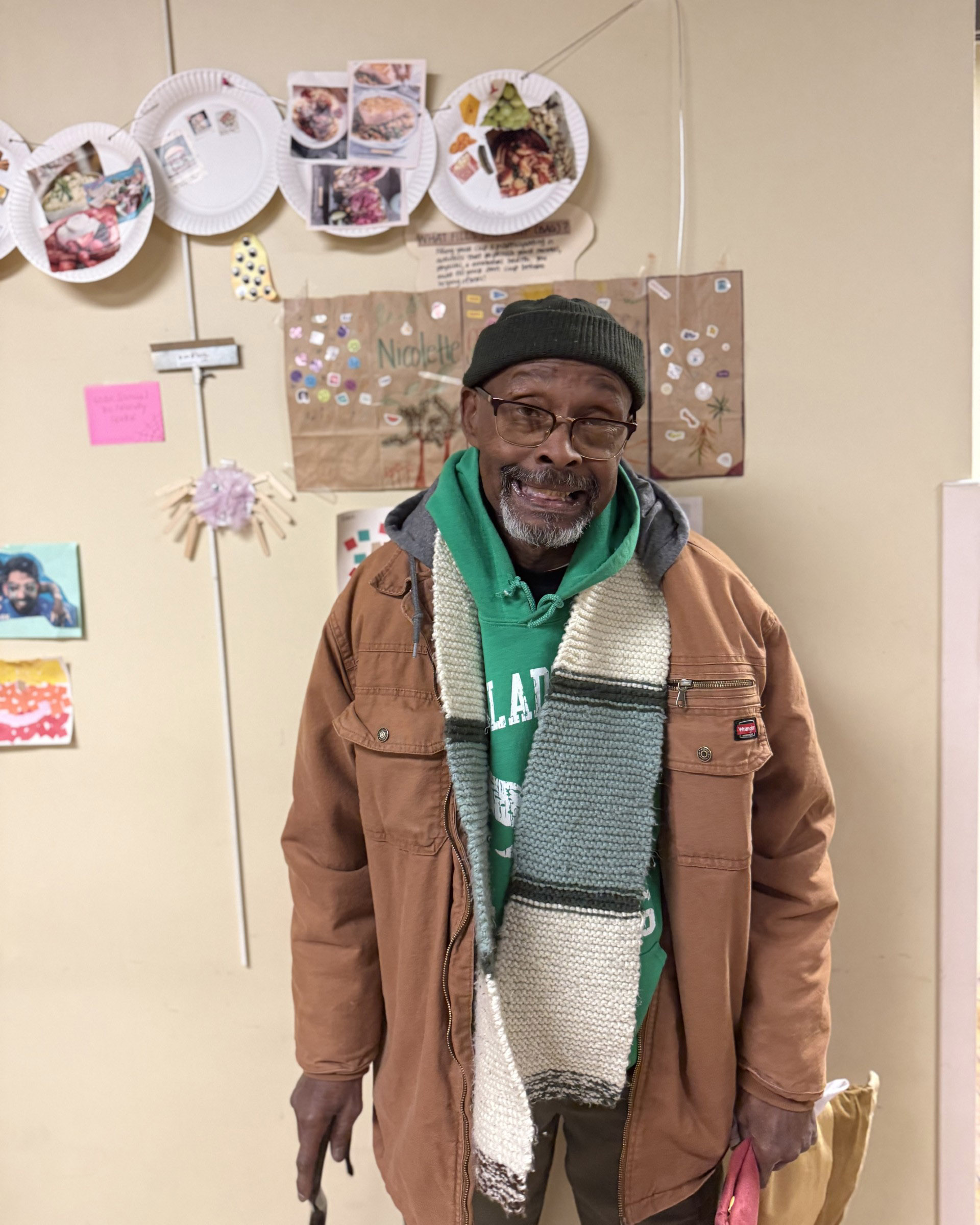 Across town, Stanley’s “welcome home” looks different, but the theme remains the same.
Stanley is 75, an Army veteran who served overseas in Germany. He’s also blunt about how quickly life can slip sideways. He talks about “bad decisions,” about alcohol use disorder, about loss stacking on top of loss until coping becomes its own crisis.
He’s not trying to impress anyone with the story. He’s telling it the way it happened. And then he says something that quietly explains why permanent supportive housing can’t be treated like a limited-time coupon: because people don’t unravel on a schedule.
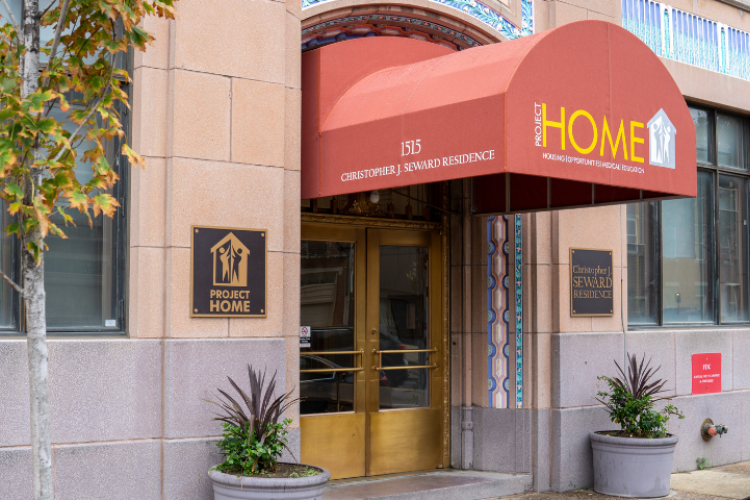
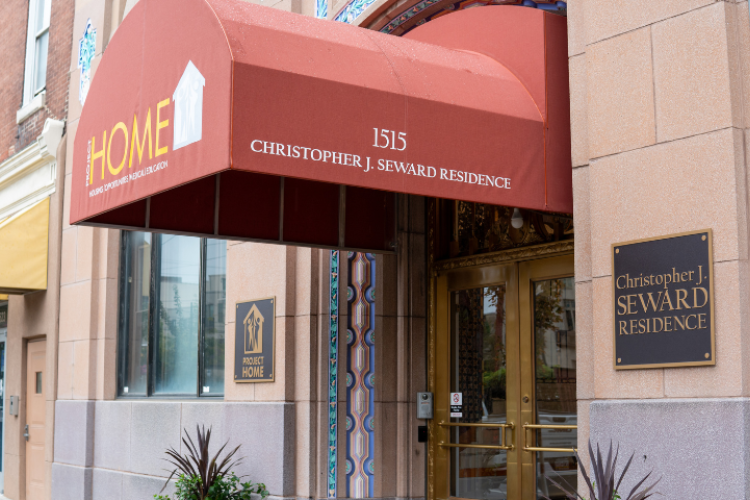
Stanley found his way to Project HOME through a Veteran’s Association case manager and moved into what is now called Christopher J. Seward Residence. Today, he calls it home with the kind of pride that only makes sense when you remember what it costs to lose one.
He doesn’t romanticize recovery, either. After a stroke, he describes the stakes in plain language: “I don’t drink, I don’t use.” Stanley ties his stability to his housing and the support around it, not as a moral trophy, but as the structure that makes the decision sustainable. Because willpower is not the same as support. And isolation is not the same as independence.
Stanley is grateful for the staff. It’s the kind of gratitude that comes from being seen consistently, not occasionally. “There are some very strong, hardworking staff members. I appreciate everything that they’ve done for me,” he says.
He talks about being “still above water,” and he says it like someone who knows exactly what it feels like to sink. Then comes his phrase that lingers: “The light is always lit at the end of the tunnel.” Not sometimes and not if you earn it fast enough. Always.
That’s what “permanent” means when it’s paired with “supportive.” It means the tunnel doesn’t close behind you the moment you’re shaky. It means stability isn’t a reward for being perfect, rather it’s the foundation that helps people become well.
Permanent Supportive Housing "Crucial"
Nicole Wakeman, director of supportive housing, has spent more than a decade in supportive housing work. Since joining Project HOME in 2020, she’s watched the pattern repeat with enough consistency to stop calling it a coincidence. Her conclusion is direct: “Permanent supportive housing is crucial it keeps people housed. It provides wraparound supports.”
She’s seen what happens when housing is treated as a short-term stop instead of a long-term platform. Time-limited programs can help some people, sure but Nicole believes there’s no one-size-fits-all. People don’t heal at the same speed. People don’t stabilize in the same way. And when someone has survived trauma, untreated mental health needs, substance use disorder, or the sheer stress of homelessness itself, “hurry up” isn’t a clinical strategy.
That’s why Nicole backs the notion of individualized approaches, and that’s why she doesn’t frame permanent supportive housing as a last resort. She frames it as the tool that actually matches reality: “Everyone’s success looks different,” she explains, and support has to flex with the person, not force the person to fit the program.
There’s data behind this, too because compassion and measurable outcomes aren’t mutually. Nationally, the 2024 Point-in-Time count reported 771,480 people experiencing homelessness on a single night, which was the highest ever recorded. Locally, Philadelphia’s 2025 Point-in-Time count reported 5,516 individuals experiencing homelessness, including increases in both sheltered and unsheltered homelessness. Pennsylvania’s Housing Inventory Count reports 12,938 permanent supportive housing beds statewide, including 5,362 in the Philadelphia Continuum of Care.
And Project HOME’s position on housing with services together, shows up not just as philosophy, but as policy and performance. In a Project HOME policy brief, reports that with effective housing and services, “more than 95 percent of people can break the cycle of homelessness.” That’s not luck. That’s what happens when housing isn’t standing alone.
Back at Connelly House, Brandi is thinking about what’s next, whether that’s learning new skills or building a future that isn’t fueled by crisis management. Stanley talks about the kind of future that sounds simple until you’ve had to fight for it back: more time, more health, more moments with the people he loves. Nicole thinks about a future in systems and sustaining what works, expanding what’s proven, and refusing to pretend that homelessness is inevitable when the solutions are sitting right in front of us.
And the solutions aren’t mysterious. They look like case management that doesn’t disappear when someone gets off track or struggles to move forward. They look like health care that treats a person as a whole human being. They look like operating funds that keep supportive services staffed. They look like job training that understands gaps aren’t character flaws. They look like education that isn’t reserved for the upper class. They look like permanent supportive housing that’s sturdy enough to hold someone’s life afloat while they rebuild it.
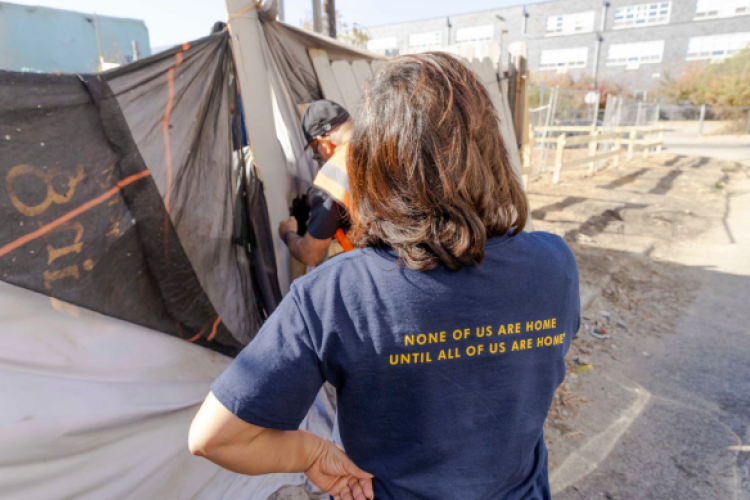
It's embedded in our saying, “None of us are home until all of us are home.” Brandi, Stanley, and Nicole each live in the meaning of that sentence from different angles as a resident, a veteran, and a professional, but they land in the same place.
Permanent supportive housing works because it doesn’t just hand someone a key and wish them the best. It stays. It supports. It holds.
Or, in Stanley’s words, “The light is always lit at the end of the tunnel.”