Roots and Branches: Housing is Healthcare
Housing and healthcare aren't two things you add together. For many of our residents, housing is healthcare.
Ten years ago, Project HOME opened the doors of Stephen Klein Wellness Center (SKWC) with a simple, but ambitious vision: people experiencing homelessness and poverty deserve high-quality, compassionate healthcare in a place where they feel welcomed, respected, and valued.
There was a time when we thought about healthcare as an additional service offering; housing alone wasn't enough. People needed a roof, and they needed care—two separate ingredients, both essential, and our job was to provide both. We saw people struggling with chronic illness, mental health conditions, substance use disorders, and trauma while trying to survive without a safe place to call home. Empowering someone to rebuild their life meant more than shelter. It also meant access to care.
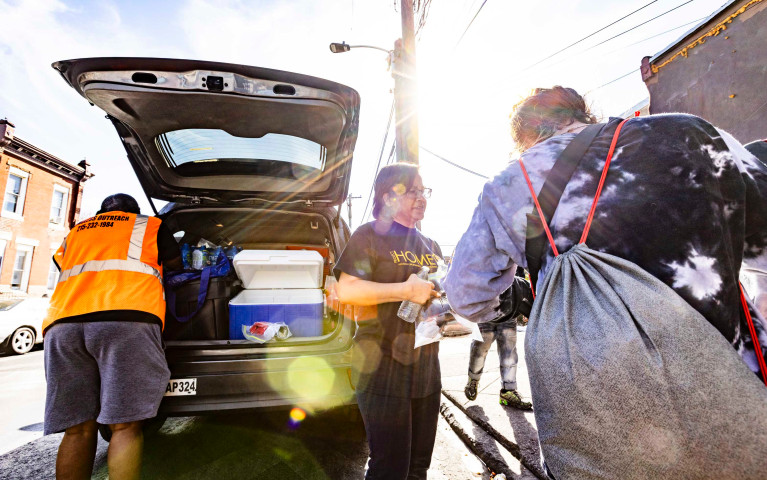
We evolved from providing services in a one-room clinic to high quality medical services in the Hub of Hope, through the Epstein Street Medicine Program, and SKWC, all under our Federally Qualified Health Center status.
But our experience doing this work taught us something the addition model didn't capture. Housing and healthcare aren't two things you add together. For many of our residents, housing is healthcare.
Last month I stood alongside philanthropic, city, and hospital leaders at the ribbon-cutting for the expanded Hawthorne House Respite, built as part of the Project HOME Collaborative with Jefferson Health, Penn Medicine, Temple Health, and Prevention Point. Twenty new beds, bringing our total to 34, for Philadelphians who are homeless and managing addiction alongside serious medical needs.
Hawthorne House Respite isn't permanent housing. It isn't shelter, and it isn't medical respite in the traditional sense. It's what a lot of our patients need in the space between: a clean, safe place to heal. Refrigeration for medication. A bed to put a swollen foot up and rest. A case manager to help schedule a follow-up visit. A hospital can treat an infection, set a bone, stabilize a diabetic crisis, but it can't guarantee the treatment holds once the patient walks out the door. That guarantee depends entirely on where they walk out to.
When "go home and rest" is the doctor's order, Hawthorne House Respite is our answer to a question of where "home" is. Without it, people cycle back through the emergency room—at greater cost, for longer stays, with worse outcomes.
Places like SKWC and Hawthorne House Respite are reminders that healthcare isn't separate from our mission to end homelessness. It's central to it. Because when people have access to quality healthcare, they're better able to maintain housing, pursue employment, reconnect with family, and reach their goals. When healthcare providers, housing organizations, and community partners work together, we build something more powerful than either alone: a system that sees the whole person.
We started believing we needed housing and healthcare. What we've learned since is that we were never really talking about two things at all.