Building HOME: The Pillars Behind Stephen Klein Wellness Center
Ten years after opening its doors, three healthcare pioneers reflect on the relationships, resilience and vision that transformed an idea into one of
Before there was a wellness center, there was a lesson. It wasn't learned in a classroom or at a hospital. It came from a group of men who refused to walk upstairs.
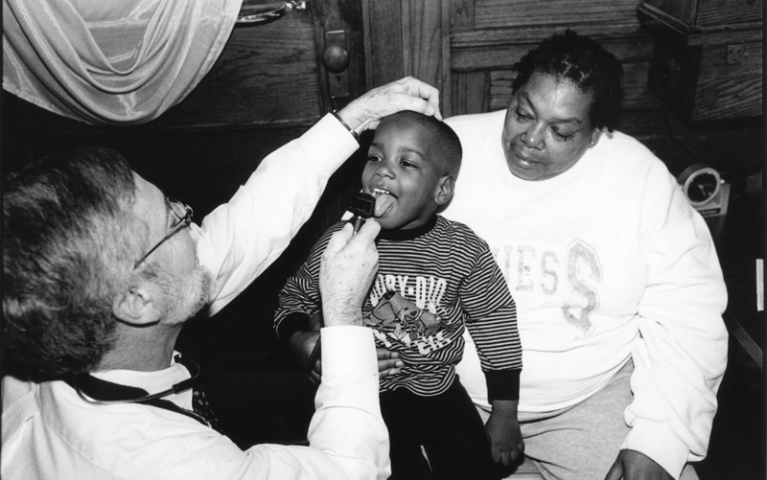
More than 30 years ago, Dr. James "Jim" Plumb and first-year medical student Dr. Lara Carson Weinstein arrived at St. Columba Parish eager to provide medical care for men experiencing homelessness. Volunteers had transformed a small choir loft into a makeshift clinic. Everything was ready, except for the patients. "For probably two or three or four months," Jim recalled, "we didn't see any men. They wouldn't come upstairs."
Rather than waiting for patients to come to them, Jim suggested something different. Go downstairs. Instead of leading with stethoscopes and prescriptions, they played cards, shared meals, helped with showers and simply listened.
"There was no one like Jim," Lara said. "We wanted to check their blood pressure and hand out medications. He said, 'No. We're going to go talk to these guys. They don't trust us, and they shouldn't. We're just going to spend time with them.'"
That simple decision became the foundation of what would one day become Project HOME's Stephen Klein Wellness Center (SKWC) and healthcare services.
Building Trust Before Buildings
Lara's journey began during her first year of medical school, fueled by frustration about the growing number of people experiencing homelessness she saw throughout Philadelphia. "There must be something [Jefferson Health] could do," she remembered thinking.
Jim's response was simple: "Let's learn together." That conversation led them directly to Sister Mary Scullion, who invited the pair to become part of a community taking shape at St. Columba Parish. Before practicing medicine, however, they first had to earn trust.
That lesson continued when Project HOME expanded to St. Elizabeth's Church in North Philadelphia. Community leader Miss Helen Brown welcomed them into the neighborhood, introducing families, sharing its history, and helping residents see healthcare providers as trusted partners. "Miss Helen taught us about North Philly," Lara said. "She taught us about resilience, and she embraced us as people the community could trust."
Slowly, connections and relationships began to take form. Neighbors managing chronic illnesses, people in recovery, and families navigating loss started seeking care. This wasn't solely because medical services were made available; it was because someone was willing to listen first.
"I learned so much from the men in recovery," Jim reflected. "The stories people would tell me explained so many things about their lives that you can't learn any other way." For Jim and Lara, healthcare could never be separated from the realities responsible for shaping a person's life.
A Vision Bigger Than Healthcare
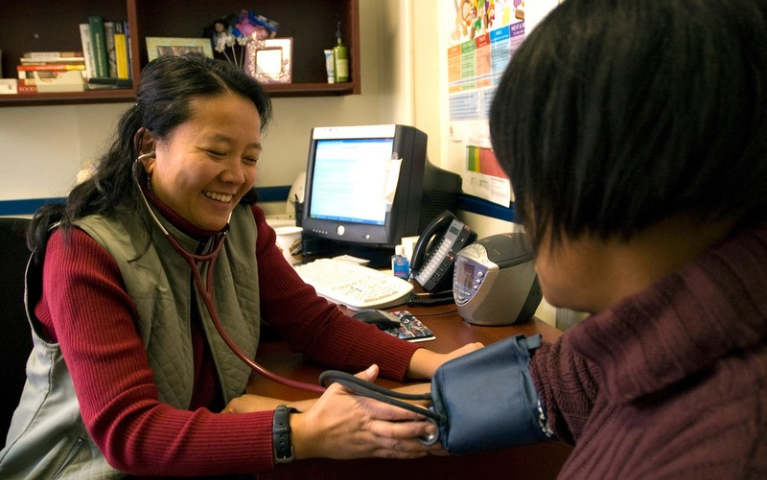
While Jim and Lara continued caring for patients, Monica Medina-McCurdy was finding her own path to Project HOME. Inspired by her sister, one of Project HOME's earliest outreach workers, Monica first joined the organization by helping secure grants before leaving to become a physician assistant (PA). "I wanted to become a PA so I could come back to Project HOME, but on the healthcare side," she said.
She returned to St. Elizabeth's Recovery Residence (SERR) as one of Project HOME's first full-time healthcare providers, working to transform a volunteer clinic into a sustainable healthcare system.
As conversations about a permanent wellness center began, the original vision focused largely on recreation. Jim imagined something broader. What if the community could receive medical care, behavioral healthcare, dental services, medications, healthy food, and connections to housing all under one roof?
That question became the blueprint for the SKWC.
Where Healthcare Meets HOME
Turning that vision into reality requires determination, planning, fundraising, partnerships, and enough staff that could support a healthcare system built to last. Monica still remembers racing to submit the federal application that would allow Project HOME to become a Federally Qualified Health Center (FQHC). "I remember having the worst migraine," she laughed. "It was five minutes before the deadline, and I still hadn't hit send."
Even after submitting the application, a federal government shutdown delayed funding decisions while Project HOME continued moving forward with construction. "They had such faith that this plan was going to work," Monica recalled. "We had already raised money to build the building, and we were just believing the grant would come through."
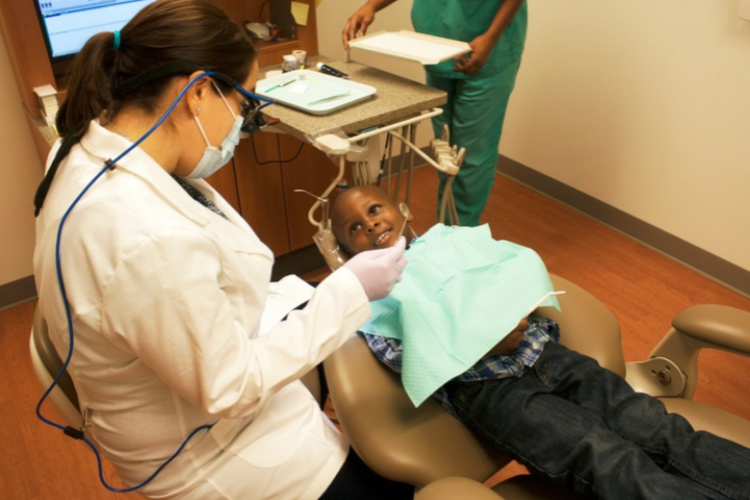
Eventually, it did. When SKWC opened over ten years ago, it represented a new healthcare facility that illustrated a philosophy; healing requires far more than treating illness. Medical care exists alongside behavioral health, dental services, pharmacy services, case management, and hospitality services because every aspect of a person's life can influence their health.
For Jim, some of the building's most meaningful features aren't the exam rooms. "SKWC has a washer and dryer and a shower, the food pantry, the medical-legal partnerships. That's what creates whole person care," he said.
The healthcare trio had already learned this lesson: a prescription means little if someone has nowhere safe to sleep. Managing diabetes becomes nearly impossible without access to healthy food. Recovery is increasingly difficult when every day is spent focused on survival. "Housing, in many ways, is more important than healthcare," Lara said. "We still have a long way to go."
Monica agreed. "It's because we lack affordable housing," she expanded on. "That's why people end up in revolving doors in hospitals. We're spending enormous amounts of money, basically just not solving the problem."
Today, SKWC continues to embody Project HOME's H-O-M-E model by recognizing that lasting health and wellness must also address the barriers that prevent people from living healthy, stable lives.
The Legacy That Continues to Grow
When asked what makes them the proudest ten years later, each spoke about the people- the patients who trusted them, the students they mentored, and the healthcare professionals who carried Project HOME's mission into communities across the country. "I feel like we've helped launch a bunch of careers for the better and for the good of the world," Monica reflected.
Jim flashed a smile as he looked toward Laura. "I think one of the biggest fruit trees is sitting right there," he said. "The number of folks Laura has trained and mentored. There's a lot of good fruit under that tree." That may be SKWC's greatest legacy, and it's still being felt today.
Certainly, it can be measured by the thousands of patients who have received compassionate, integrated healthcare over the past decade. It is equally measured by every provider inspired to see and understand the entire person, not simply the illness.
Today, Jim continues mentoring future healthcare professionals. Lara serves as a professor of Family and Community Medicine at Jefferson Health, leading innovative addiction medicine programs. Monica now educates future physician assistants, promoting the same patient-centered philosophy that shaped her own career.
Looking back, it seems almost serendipitous that one of the defining moments in Project HOME's healthcare story occurred before anyone examined a patient or wrote a prescription. The patients didn't come upstairs, so the physicians went downstairs.
More than a decade later, that simple act still captures the essence of SKWC. It reminds us that healing begins with a relationship. It doesn’t begin with a diagnosis, but with dignity. When we choose to meet people where they are with compassion, respect and unwavering belief in their worth, we do more than improve health; We help build HOME.