What is Functional Zero—and How Do Communities Achieve It?
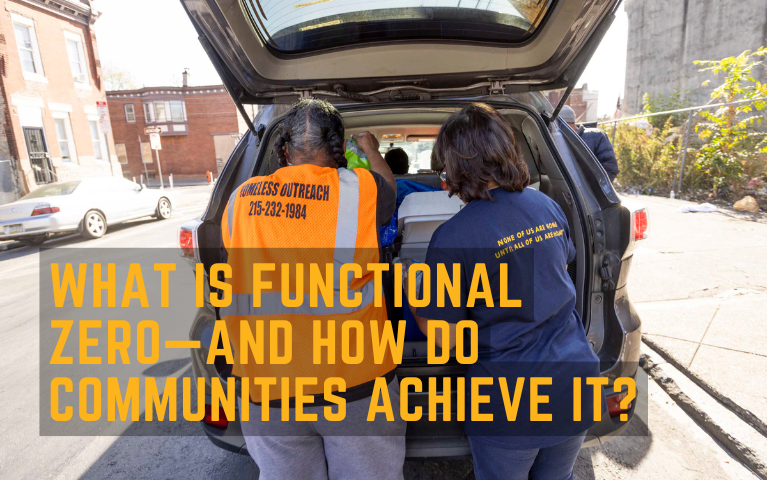
Functional zero is both a goal and a method for communities seeking to meaningfully address homelessness in their region. It is achieved when the number of people who are newly homeless is lower than the number who are exiting homelessness into permanent housing in a given period of time. The goal of functional zero is not to prevent every instance of homelessness, but rather to ensure that homelessness is rare, brief, and nonrecurring.
A Step-by-Step Process
Functional zero is not just an outcome; it is a step-by-step process for building systems that any community can adopt. The process begins by focusing on a specific sub-population, such as people experiencing chronic homelessness or veterans, who often have distinct needs for housing and supportive services.
A 2021 study from the Urban Institute found that focusing on one sub-population can generate benefits that extend to the whole community. Concentrating on one area reduces the overall demand on homelessness response systems, emergency departments, and social services. When those efforts are successful, they can create a template that policymakers and service providers can apply to other groups, such as youth and young adults.
Using Data to Drive Solutions
Once the sub-population has been identified, functional zero communities create a by-name database of every individual within that group. This living database tracks each person's homeless history and specific housing needs, and it must be updated regularly to be accurate. Once a comprehensive by-name list has been assembled, the process of matching individuals to appropriate housing and supportive service programs can begin.
By-name databases also play a critical role in promoting equity and racial justice—both among people who are homeless and within homelessness response systems. They make disparities visible and help to ensure that resources are distributed fairly.
Collaboration Across Systems
Building and maintaining a by name list also promotes close collaboration across homelessness response networks. Instead of operating independently, outreach teams, shelters, and housing providers must work together to identify people who are experiencing homelessness and connect them to the programs that best meet their individual needs—not just what happens to be available from a particular provider.
This collaboration transforms the local response from a collection of independent programs into a cohesive data informed system. This emphasis shifts communities from managing homelessness to ending it for specific groups, one community at a time
Sustaining Success
Achieving functional zero is only possible through sustainability—maintaining a system that can quickly identify new instances of homelessness and just as quickly connect people to housing and services that meet their needs. Communities such as Rockford, Illinois and Bergen County, New Jersey have already achieved functional zero for veteran and chronic homelessness, proving that through sustained collaboration and the use of real-time data, communities can turn a vision into reality.